
Namibia travel · NamSpace
What to Pack for Namibia: A Practical List by Season and Region
Build a useful core packing kit, then add the layers and essentials for Namibia’s desert, coast, safari and river regions.
As an Amazon Associate I earn from qualifying purchases. This article contains optional Amazon links. Check delivery and the full cost before buying.
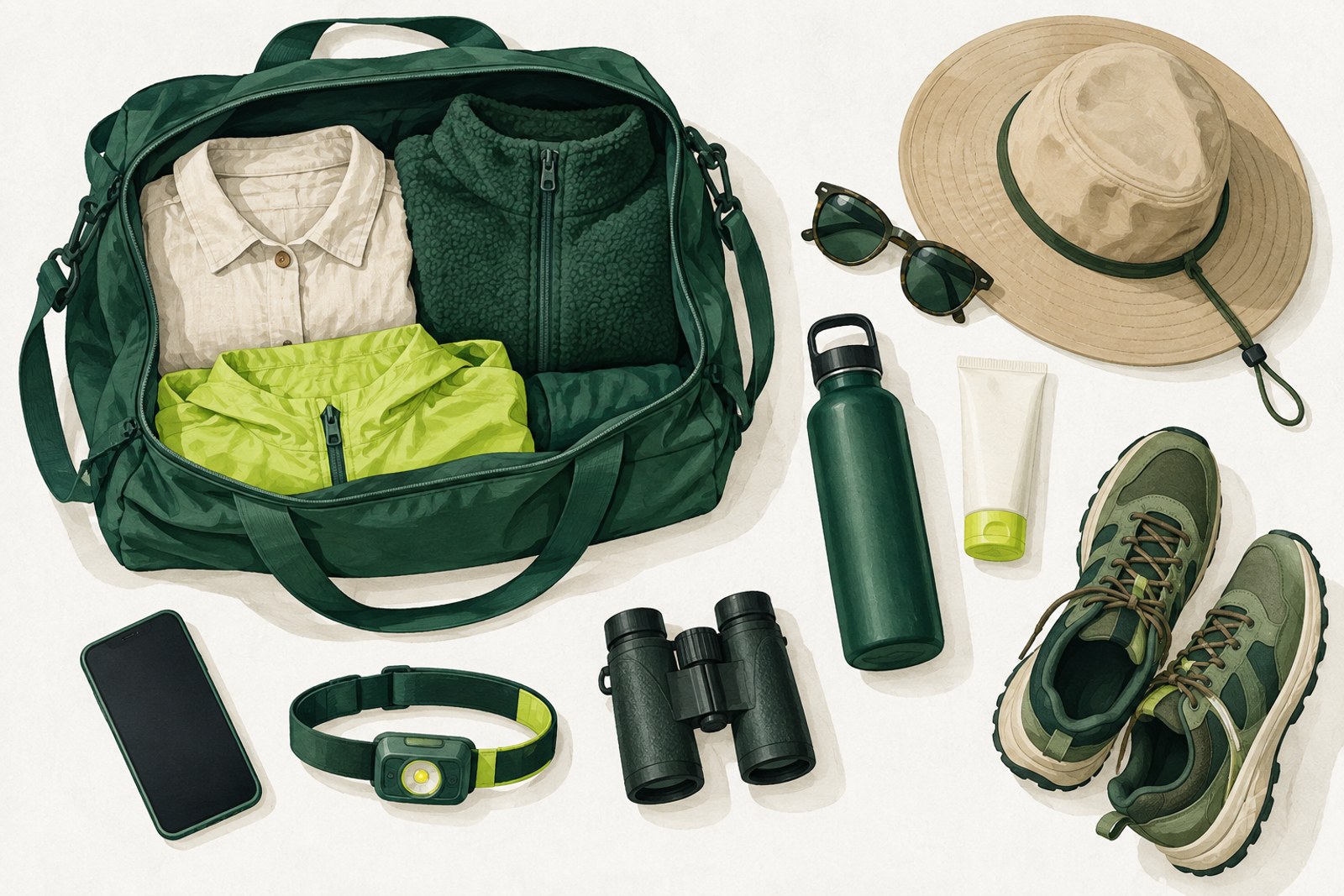
Image credit & rights
AI-generated editorial illustration for NamSpace using OpenAI image generation. Powered by TetuMedia. Generic equipment; no product endorsement or documentary destination scene.
Last checked: 4 October 2026
You can pack for a hot country and still be cold in Namibia.
That is the first thing to understand before filling your bag. A trip might take you from an inland afternoon to a windy coastal evening, then into an early safari drive or a desert campsite. The clothes that felt right at lunch do not necessarily feel right before sunrise.
The answer is not a bigger suitcase. It is a small collection of useful layers, with a few additions for your route.
Start with what you will do, where you will sleep and how you will travel. A lodge-based road trip needs a different bag from a camping trip. A light-aircraft connection can change your luggage choices before you even think about shoes.
This guide gives you a practical starting list, then explains what to add for the desert, coast, safari and river regions. Adapt the quantities to your trip length, laundry access and personal needs.
The short answer: pack a core kit, then add for your route
For a typical road trip using established accommodation, I would start here:
- lightweight tops and a breathable long-sleeved shirt;
- comfortable trousers, with shorts if you use them;
- a fleece or another warm mid-layer;
- a wind-resistant outer layer;
- comfortable, already-tested walking shoes;
- a hat, sunglasses and sunscreen;
- a reusable water bottle and a small day bag;
- personal medicines and a compact first-aid kit;
- insect repellent appropriate for you;
- your phone, charging cables, a suitable plug adapter and offline travel information;
- a small torch or headlamp; and
- travel documents, insurance details and booking contacts.
That is a foundation, not a requirement to buy twelve new things. Use the equipment you already know and trust. Add specialist kit only when an activity or accommodation choice calls for it.
1. Think in layers rather than outfits
Choose clothes that work together. A light shirt, fleece and outer layer can handle several different parts of the trip without becoming three separate wardrobes.
Comfort matters more than dressing for a safari photograph. Choose fabrics and fits you can sit, walk and drive in. If you will wash clothes along the way, favour pieces that are easy to wash and dry, and confirm whether your accommodation offers laundry and how long it takes.
Bring at least one outfit you would feel comfortable wearing in town or to dinner. It does not need to be formal unless you have an event or a venue with a dress requirement. Ask when booking instead of carrying an extra wardrobe on a guess.
A useful test is to lay everything out, then ask of each item: When will I use this, and what else could do the same job? Keep the things that solve a real problem.
2. Adjust for the season, but keep the coastal layer
The Namibia Tourism Board describes broadly hotter summer months from October to April and cooler winter months from May to September. It also notes substantial differences between regions, cold inland and desert nights, and a cooler, frequently foggy coast.
Those are planning patterns, not a forecast for your travel dates. Check conditions for the places you will actually visit before departure.
| Travel period | What to emphasise | What to keep in the bag |
|---|---|---|
| May–September | A warm layer for mornings and evenings; warmer sleeping arrangements if camping | Light daytime clothes, sun protection and a wind layer |
| October–April | Breathable clothing; rain protection where your route and forecast call for it | A light warm layer and coastal wind protection |
| Any season with coastal nights | Layers you can add during an outdoor activity or evening walk | Shoes and clothing comfortable in wind and cooler air |
For a winter camping trip, “I packed a fleece” is not a complete sleeping plan. Confirm the suitability of the sleeping bag, bedding and shelter for your expected conditions. For summer, avoid assuming that every stop on your itinerary will feel equally hot.
For help choosing dates, use our best-time-to-visit guide.
3. Add a small kit for each region
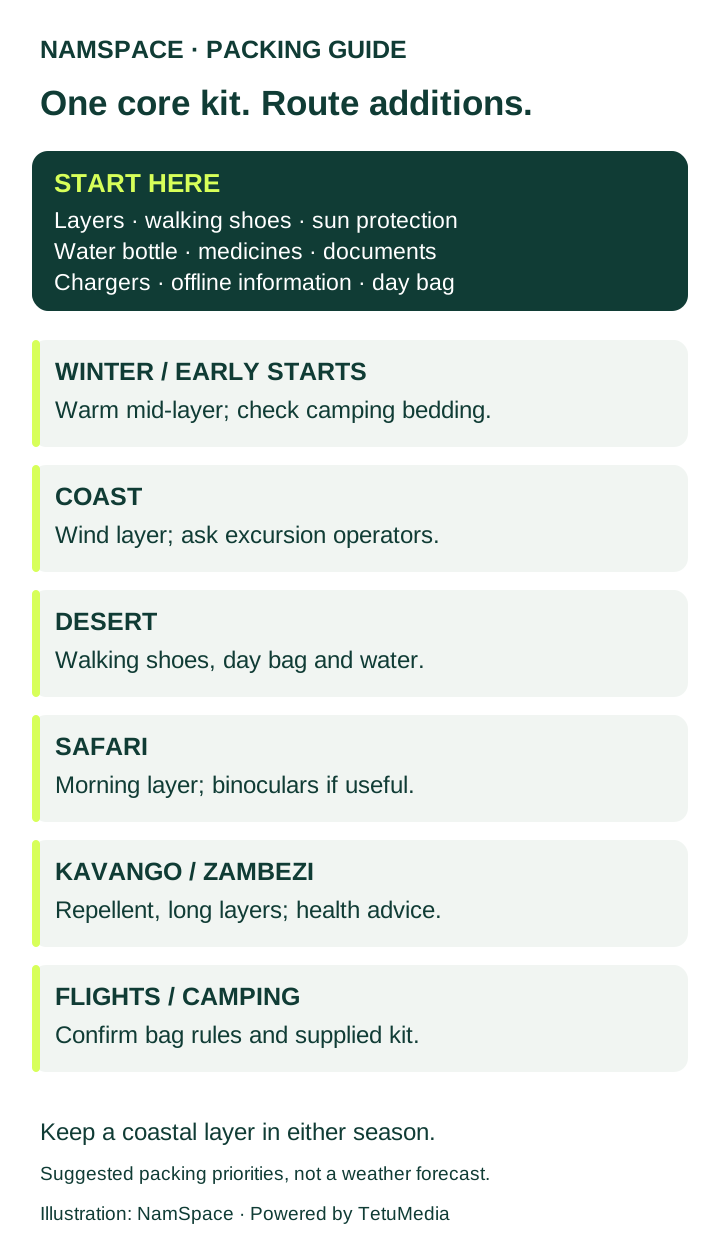
Image credit & rights
Original NamSpace explanatory illustration. Powered by TetuMedia. Suggested priorities, not a weather forecast.
Sossusvlei, Deadvlei and other desert stops
Take a sun hat, sunglasses, sunscreen, a water bottle and comfortable walking shoes. Put the things you need for the outing in a day bag rather than leaving them buried in your luggage.
A light long-sleeved top gives you another clothing option outdoors. Keep an early-morning layer accessible. Protect your phone or camera with a closable pouch or bag, and carry a cleaning cloth so you are not wiping dust with whatever is nearest.
Choose footwear you have used before. A trip is a poor place to discover that your new boots rub after half an hour. If your plans include a longer walk, check the activity's requirements and your own comfort rather than treating an everyday sightseeing list as a hiking kit.
Our Sossusvlei and Deadvlei guide explains how to plan the day and what to confirm about access and transfers.
Swakopmund and Walvis Bay
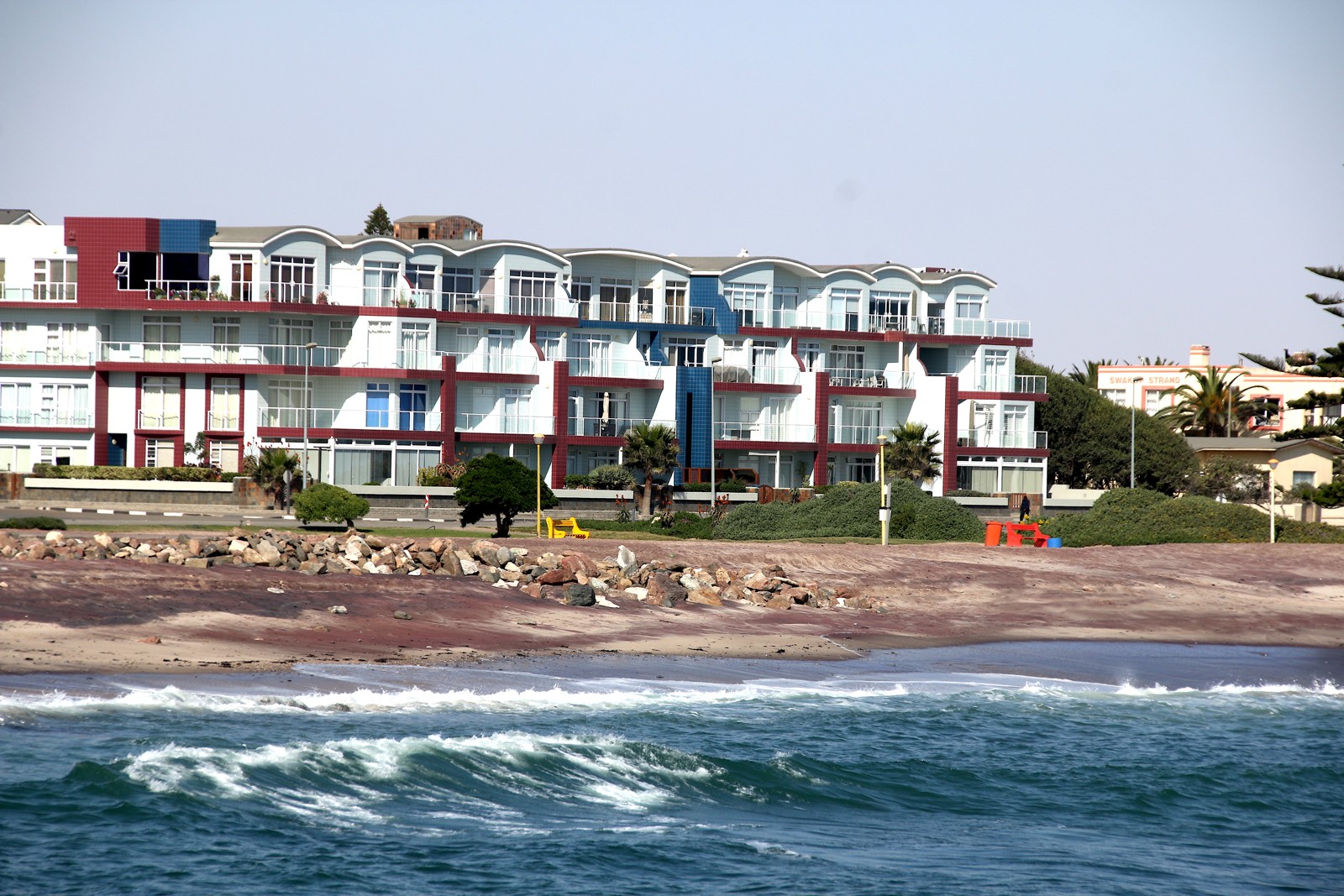
Image credit & rights
Swakopmund see from the Jetty.jpg — Hp.Baumeler, via Wikimedia Commons. CC BY-SA 4.0. Resized for web; no scene content changed. Adapted image retains CC BY-SA 4.0.

Keep your wind layer and warm mid-layer near the top of the bag. You may want them during an outdoor activity even when the inland part of your trip has been hot.
If you book a boat trip, kayaking or another excursion, ask the operator what clothing and footwear to bring and what protective equipment is supplied. Take a secure pouch for anything you do not want exposed to spray. Activity-specific equipment should come from the provider's instructions.
Read Swakopmund vs Walvis Bay before deciding where to base yourself.
Etosha and other safari stops
A warm layer is useful for early outings. Binoculars are worth considering if wildlife viewing is a major reason for your visit, but you do not have to buy a long camera lens to enjoy the park.
Take sun protection, a charged phone or camera, and enough storage for your photographs. If you are joining a guided activity, ask about clothing and luggage before leaving your main bag behind. Quiet, comfortable clothes are a sensible choice; you do not need to replace everything you own with safari clothing.
Our Etosha first-timer guide covers the larger planning decisions.
Kavango and the Zambezi Region
Add breathable long trousers, a long-sleeved top for evenings, repellent and a light rain layer when the forecast warrants it. A protective pouch is useful for electronics on a river excursion.
Arrange travel-health advice for your actual itinerary. The CDC identifies malaria risk in parts of Namibia, including Kavango and Zambezi. Ask a qualified clinician about prevention before travel; a packing list cannot choose medication for you. Bring prescribed medicines and follow the instructions you are given.
Do not interpret packing swimwear as advice to swim in a river. Ask about designated facilities and follow local activity guidance.
4. Choose your main bag after checking the transport
For a self-drive trip, a bag that fits comfortably in the vehicle is more useful than one that happens to have the largest capacity. Think about the number of people, luggage and any camping equipment sharing the space.
If there is a light-aircraft leg, read that operator's baggage instructions before selecting your bag. FlyNamibia Safari currently specifies soft luggage without a rigid structure, retractable handle or wheels. Confirm the allowance and dimensions for your own booking; do not assume your international flight's baggage allowance carries through to every connection.
Use a small day bag for outings. That lets you leave your main bag organised and carry only the water, layers, documents and equipment you need for the day.
5. Keep the important things with you
Put essential medicines, necessary documents, charging cables and a spare change of clothing in your hand luggage when flying. Carry a secure backup of booking details and emergency contacts that you can access without a mobile connection.
Documents depend on your circumstances. Check your passport and entry requirements with the relevant official authority. For a rental vehicle, confirm the licence, identification and any cross-border documentation your rental company requires.
Store copies securely; do not share passport scans in public travel groups. Keep the original documents available when they are needed and use your accommodation's secure storage appropriately.
Our Namibia Travel Guide covers the broader arrival and trip-planning questions.
6. Power, phones and camera equipment
Bring the charging cables you actually use. Ask your accommodation about sockets and select an adapter compatible with the sockets and your equipment. The Tourism Board lists mains power as 220/240 volts; check the input rating on each device. A plug adapter does not convert voltage.
Save your route, booking addresses and key phone numbers for offline use before heading away from reliable connectivity. Keep the phone charged and have a charging arrangement appropriate to the vehicle you have booked.
If you bring a power bank, check the airline's current rules before flying. IATA says power banks and spare lithium batteries belong in carry-on baggage, with protection against short circuits. Capacity, quantity and in-flight use restrictions apply; your carrier's instructions matter. Recheck if your cabin bag is taken for placement in the hold.
For camera equipment, take the kit you will use rather than everything you own. A spare memory card, charging plan and protective bag often deserve attention before another lens. A drone requires separate checks with the relevant authorities and land or park managers; do not assume you may fly it because you packed it.
7. Camping and self-catering: check what is supplied
Before buying or packing camping equipment, ask for a written inventory from your vehicle supplier or accommodation. A description such as “camping-equipped” does not tell you the condition, capacity or contents of every item.
Confirm bedding, sleeping bags, cooking equipment, eating utensils, lighting and the arrangements for drinking water and food storage. Check how the equipment works during handover, including anything you will need after dark.
For self-catering accommodation, ask what is in the kitchen and whether essentials such as towels are provided. A shopping plan is often more useful than trying to bring a full kitchen from home.
Keep vehicle recovery equipment separate from your personal packing list. Ask the supplier what is provided, what you are expected to know and how to get assistance. Possessing equipment does not replace knowing how to use it.
Use our driving guide, accommodation guide and car-hire directory to plan those details.
8. What can usually stay at home?
Start by questioning bulky duplicates: several heavy pairs of shoes, a different outfit for every evening, equipment for activities you have not booked, and a large camera system you do not enjoy carrying.
You may still have good reasons for any of those things. The point is to make the choice deliberately, not to follow a universal rule about what a traveller should look like.
Do not remove essential medical supplies to make a bag lighter. For medicines, bring what you need for the trip and discuss delays, storage and documentation with your clinician or pharmacist. Confirm import requirements for controlled medicines through the appropriate official authority.
A final packing check before you leave
Make the last check about your actual journey:
- Route: have you allowed for inland, coastal and river-region conditions?
- Season: have you checked the forecast and planned for mornings and nights?
- Transport: does your bag meet every flight's rules and fit the booked vehicle?
- Accommodation: what bedding, laundry, towels and cooking equipment are supplied?
- Activities: what have operators asked you to bring?
- Health and documents: are personal medicines, travel advice and necessary paperwork sorted?
- Daily access: can you reach water, a layer, your charger and booking contacts without unpacking everything?
Then close the bag. A thoughtful packing list should make the trip easier, not turn preparing for it into a shopping project.
Comparing the full trip cost? Read Namibia on a Budget for complete quotes, route choices and a worked planning example.
Sources and updates
Checked on 4 October 2026. Packing quantities and route additions are NamSpace editorial suggestions, not a forecast or a substitute for operator instructions or individual medical advice.
- Namibia Tourism Board: climate — season and regional context.
- Namibia Tourism Board: currencies and general practical information — listed mains voltage.
- CDC: Namibia traveller health — travel-health preparation and malaria advice.
- IATA: safe travel with lithium batteries — battery carriage guidance; confirm your airline's current restrictions.
- FlyNamibia Safari: flight and baggage information — soft-bag requirements; confirm the instructions for your specific booking.